Showing posts with label Bohumil Hrabal. Show all posts

Sunday, May 2, 2010

I Would Like to Burn a Theme at This Forum

Josh,

You're right, two years is a long time. And like a neglected lawn, apparently, old blogs can actually sprout weeds. Since we last posted, we received a slew of comments--almost all from spambots. I've just spent an hour or so deleting these comments form our old posts. Most were an illegible scramble of code and nonsense; some, though, were charmingly ridiculous. My favorite, from "Anonymous":

"Hi there! I would like to burn a theme at this forum. There is such a thing, called HYIP, or High Yield Investment Program. It reminds of ponzy-like structure, but in rare cases one may happen to meet a company that really pays up to 2% daily not on invested money, but from real profits."

So, Josh, if you do not mind, in keeping with the Eastern European theme you cultivated with your Hrabal talk, I would also like to burn a theme at this forum.

(I've been singing that quote for the past hour to the tune of "Blowing in the Wind": How many themes must we burn at this forum before we can call it a forum?)

Anyway, it's nice to be back. I had intended to work on my novel this afternoon, but keeping with another theme of the blog, I've sought diversion. Writing and not-writing. Lately, it's been hard for me to make the distinction between the two. When I'm not physically writing the novel I'm thinking about it: devising scenarios, constructing sentences in my head. I wonder if this is productive?

Hemingway, in his sometimes helpful, sometimes absurd, basic principles for writing, said: "Do not think about writing when you are finished for the day but allow your subconscious mind to ponder it."

Good stuff? Early on, Hemingway also thought that the energy required for writing came from the same place that sexual energy came from, and so he (he said) he abstained from sex or masturbation while working on his projects.

I'm not sure.

I do know that a lot of the stuff I do besides writing--cooking healthy food, for example, or exercising--explicitly serves my writing life. I run every day because, I believe, running gives me the energy and motivation to continue writing. Without running, I can't imagine how I might sustain this energy or motivation. Of course, I might find it in the work itself, and that would be a nice thing to say, but practically, my brain and body need the fuel that good food and exercise provide. Writing, to me, is extremely bodily.

Of course, there's my soul, too. There's inspiration, which is different, I think, than energy and motivation. And what fuels my soul is sometimes oppositional to what fuels my body. I drink too much wine. I stay up all night talking. I wake up tired and hungover. My body hurts. And yet, my soul's inflamed.

I like what Hrabal says: "Not until we're totally crushed do we show what we're made of."

I spend all day getting healthy so that I might write. I spend all day destroying myself so that I might write. I wake up, and start again. This doesn't seem entirely sustainable. I need a more balanced fuel. I guess I find balance in all the other stuff that sustains me: reading, writing letters, writing blogs.

We wouldn't do this if we didn't care; if we didn't find it necessary. With or without this blog, I'm sure we've both spent plenty of time not-writing over the past two years. We tried another blog, but the forum just didn't seem to work. I never felt at home there. This forum, it seems, might be better for burning. There's energy here at Seventh Draft, even if it has been dormant for the past two years. We should tell Tommy and Alex, urge them to post, if they like.

Ever see this guy?


"All of old. Nothing else ever. Ever tried. Ever failed. No matter. Try again. Fail again. Fail better." ~Samuel Beckett

Tuesday, April 27, 2010

Size Is Not an Option


Dear Seth,

The almost two year gap separating what I hope will be this post (and not just another styrofoam cup along the modest New English interstate of my "writing life") is, I have to admit, completely unfathomable. It's like a picture of a whale shark or giant squid: I stare at it in disbelief, not horrified so much as ticked off that the blogger administrators have allowed such an obvious mistake to slip through their fingers. Time! Shout it in the dark with me. And yet here we are again, trying to figure out what happened and how the hell we got this way.

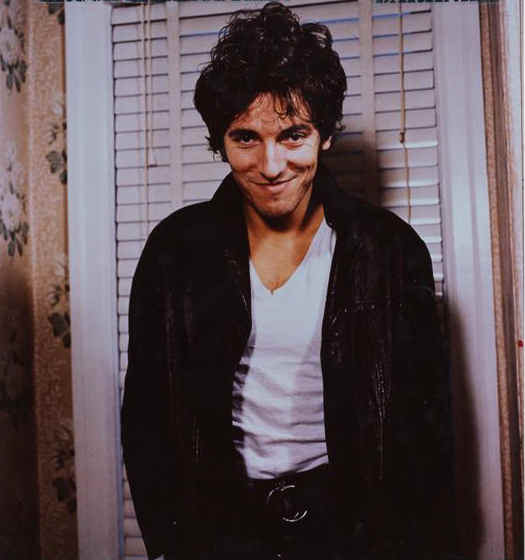
And then immediately, the thrill of writing a Seventh Draft post: like putting on an old flannel shirt, or rather the over-eager leather jacket of a man who spends hours staring at author photographs. What is it about that face? The freedom of contempt? Or a contempt of freedom? How did that person get to be who they are, and why does it seem as if they are the ones observing me - as if, in other words, the sides of the little window have been reversed, and I am the one now staring out of the red book of my life, not trapped so much as simplified, for a moment, into nose, hair, eyes, mouth?

Seth, I admit it (two admissions already, in one post!): I feel more than just vaguely stupid writing this way. I can't help it; it's my own fault; a legacy of, among other sources, my Puritan ancestors, who held onto their election by never leaving their bedrooms. I'm afraid, basically: afraid of exposing myself in a way that puts the picture I create outside of my control. The British genius/poet/Rogaine-spokesperson Geoffrey Hill (whose author photo I find no less intimidating than Rimbaud's) writes quite a bit about this dynamic - that is, about the way that writing always forces you to take those things you value most. Your ideas, for example. Your cherished constructions and sunsets and even the chameleon you found in your backyard when you were twelve--there were dozens of them back then, hundreds even: a whole ocean of miniature gentlemen exchanging jackets with one another, and the trees and grass, and then lost somewhere, until a smell somewhere between spoiled milk and rubber lead you to a small, eerily-untwitching stain behind the radiator--and then throw them into a mess of contingency, of language, where they will be changed. And rest assured, they WILL be changed: you can count on it, if only because language, being social and a shared invention as well as a private tool, is full of things that are bigger than you are.

Language! It makes you feel less big! Or if not big, then at least concentrated.

In a religious context (contexts being, as GH points out again and again, the things we step into whenever we decide to speak), this is a Fall. But as another shared passion of ours, the beer-swilling Czech levitationist Bohumil Hrabal has not just pointed out but demonstrated, in poem after poem, falling is upside-down rising, as growing is inside-out shrinking. Do you remember? And here we go, here's a perfect example of what I've been talking about, since my attempt to googlebooks Too Loud a Solitude and quote you the beautiful concluding passage, in which, I seem to remember, although it is perfectly possible (wonderful, utterly-mysterious phrase) that I have done what all us imperfect memories must do with our favorite passages, and written it myself, within the loose ruins of a building that would look completely different were I to go back and actually reconstruct it. Do you remember when Hanta the dumpster-diving hero links the memory of a gypsy girl lying beneath him in bed to a home-made kite rising in the sky, rising and falling combining in a single juxtaposition, so that the entire book is transformed (or revealed) in an instant, into a sort of hourglass that you can watch run out and then flip over, and then do it all again?

The problem is that when I actually do look up the book, I discover I am thinking, not Hrabal's book, but a completely unrelated one by the Polish science fiction writer, Stanislaw Lem, called The Futurological Congress.

Defeat - though isn't I Served the King of England on my bookshelf, only feet away, and wouldn't a single sentence serve to prove my point just as well? The phrase "single sentence" being, let's be honest, completely inadequate to describe the immense, always generous Scoobie-Snacks that Hrabal delivers on page after page?

Such as (and here, I swear, I am just opening the book and picking at random):

"And I talked in a jumbled way about how beauty had another side to it, about how this beautiful countryside, like a round loaf of bread, was all related to whether you could love even what was unpleasant and abandoned, whether you could love the landscape during all those hours and days and weeks when it rained, when it got dark early, when you sat by the stove and thought it was ten at night while it was really only half-past six, when you started talking to yourself, speaking to the horse, the dog, the cat, and the goat, but best of all to yourself, silently at first - as though showing a movie, letting images from the past flicker through your memory - and then out loud, as I had done, asking yourself questions, inquiring of yourself, interrogating yourself, wanting to know the most secret things about yourself, accusing yourself as if you were a public prosecutor and then defending yourself, and so arriving, in this back-and-forth way, at the meaning of your life." (ISTKOF, p. 128)

Oh italics, even your typographical intensity is no good when it comes to beauty like this! Pack up your bags. The war is over. Your mother is dead and your sweetheart married or marrying another, who will make her exactly as happy and unhappy as you did, though in completely different ways.

Except, of course, that if writing could be condensed into a single purpose or idea, right now, it would be, for me, "Nothing is over".

In other words, nothing is perfect, nothing is finished or done. You can pack a lot of failure, disappointment, and pain into two years; then again, you can find more than a splattering of exuberant, scalp-peeling joy, not to mention the deep happiness of good sofas, coffee, and sleep. Time doesn't care about the ratio of one quantity to the other. Quite the opposite, actually: the care in the world is something WE put there, despite time; something which we will someday take with us when we leave.

One more misreading/mishearing to close (or not close, since the unique thing about blogs, to my mind, is that, in a way that is most obviously not not only literal, they are never totally closed). In keeping with 7D's love affair with Swedish folk singers, I am listening at the moment to The Tallest Man on Earth. In a beautiful ballad ("Kids on the Run," off his new CD, The Wild Hunt), he sings "Oh meet me when I lost my part in the choir of dusk" (pure Springsteen here, only early Bruce, the one we have forgotten: "Growing Up" and piano ballads and sweated-through headbands). Except that what I hear is: "Oh meet me when I lost my part in the choir of doves". Is there a difference between these lines? I wonder. Either way, I like calls to come together, break bread, talk the talk. If they involved the dissolution of choirs, so be it. Failure is hard enough.

Sunday, September 16, 2007

Swim Like Hell

I rarely find life annoying anymore, just people and departments. The department of motor vehicles, for example, or the English department. I've been a deeply annoyed person. I suppose, though, I've changed. The old me would have quit the job; the new me, would have schemed to find a way to Mexico. I think most writers are schemers at heart and all the writers I love--like Kundera--are mythical schemers. After all, Kundera presented the world with the term "erotic friendship", thereby giving husbands the world over a new, lighter paradigm for adultery.

Annoyances--do you ever put them in your writing (beyond this blog, I mean?) I've been exploring my annoyances more and more lately, just plopping them here and there, into my poems, blogs, stories. My last story began as a diatribe against the man who hangs out in the sauna at the Y, the man who sits there and stares at me, who licks his lips. I hate this guy. He's been a thorn in my side for a few years. So I started writing about him and voila he's a character in a story about a cook and his ghostly wife! Don't ask me how I made the jump from Sauna Guy to ghost.

"I escape my life, but I gain my life..." That reminds me of a quote from one of our favorites, Bohumil Hrabal, when he writes about reading books "in the blissful hope of making a change in life." Every time I open a book I hope for change and usually, if I follow through, from the first sentence to the last, I am rewarded. When I was young I sought out certain books, books I had heard would change my life, but soon enough I realized that every book was changing my life. The simple act of reading a book is enough--I'm not even sure the book matters, although some books, obviously, have had more lasting impact than others. I don't think this is an escape at all. For me books bring me right into life--like you say, "I gain."

I have many doppelgangers by the way. They never guide me elsewhere, but always back to myself. I can't escape myself. I'm too narcissistic.

I've been ridiculously busy lately, but I'm feeling confident, full of verve. It's great to write like this because I stop tinkering, I stop thinking about how bad I really am and I just write.

Reading Kundera. Need another Hrabal book. Turning 31 tomorrow and commencing upon a self-proclaimed "Season of Triumph" with a few friends. Basically, from September 17th to Thanksgiving Day, we're going to eat right, work out hard, and generally kick ass. I've threatened to publicly humilate the friends who lapse.

Also, something a bit odd happened yesterday: I went body-surfing in the ocean off Brigantine, NJ. It was a beautiful day (sunny 75 degrees) the water was warmer than the air and the waves were perfect. I caught three, four spectacular waves--waves with tubes, fat, cresting waves! At one point I stopped to catch my breath, looked down, and saw a four-five foot shark swimming towards my leg. It bumped me, I screamed like a little girl (the people on the beach verified this fact) and I jumped away. Then I looked down and saw the ridiculously frightening dorsal fin, sinking into the water, the body curving towards me.

I swam like hell. By the time I got back to the beach I was entirely out of breath. My heart was bursting out of my chest. The few scattered people on the beach stood up and started walking towards me. Karen nearly ran into the water. I just kept saying, over and over, "Fucking shark, fucking shark."

Here's what's weird: Before I got into the water I looked at Karen and said, "Watch me. This swim will be my most emblamatic swim. This swim will symbolize our impending season of triumph!"

Funny how I've spent the entire summer thinking about sharks. Funny how I told my friends I wanted to get bitten by a shark, that I thought it would be incredibly cool to get bitten, that I
actually wanted a shark-bite, like a sort of tattoo.

Anyway, I think it was a blue shark. At least it looked like one.

This encounter has struck me. I feel like I've met my animal-spirit, face to face. I called him and he came. I'll spend years figuring out what he wanted to tell me.

For now, though, the message is clear: swim like hell.

Wish me luck.