Dear Seth,
The almost two year gap separating what I hope will be this post (and not just another styrofoam cup along the modest New English interstate of my "writing life") is, I have to admit, completely unfathomable. It's like a picture of a whale shark or giant squid: I stare at it in disbelief, not horrified so much as ticked off that the blogger administrators have allowed such an obvious mistake to slip through their fingers. Time! Shout it in the dark with me. And yet here we are again, trying to figure out what happened and how the hell we got this way.
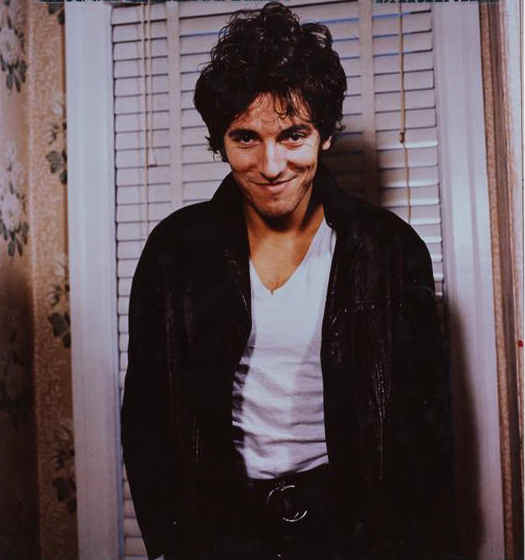
And then immediately, the thrill of writing a Seventh Draft post: like putting on an old flannel shirt, or rather the over-eager leather jacket of a man who spends hours staring at author photographs. What is it about that face? The freedom of contempt? Or a contempt of freedom? How did that person get to be who they are, and why does it seem as if they are the ones observing me - as if, in other words, the sides of the little window have been reversed, and I am the one now staring out of the red book of my life, not trapped so much as simplified, for a moment, into nose, hair, eyes, mouth?
Seth, I admit it (two admissions already, in one post!): I feel more than just vaguely stupid writing this way. I can't help it; it's my own fault; a legacy of, among other sources, my Puritan ancestors, who held onto their election by never leaving their bedrooms. I'm afraid, basically: afraid of exposing myself in a way that puts the picture I create outside of my control. The British genius/poet/Rogaine-spokesperson Geoffrey Hill (whose author photo I find no less intimidating than Rimbaud's) writes quite a bit about this dynamic - that is, about the way that writing always forces you to take those things you value most. Your ideas, for example. Your cherished constructions and sunsets and even the chameleon you found in your backyard when you were twelve--there were dozens of them back then, hundreds even: a whole ocean of miniature gentlemen exchanging jackets with one another, and the trees and grass, and then lost somewhere, until a smell somewhere between spoiled milk and rubber lead you to a small, eerily-untwitching stain behind the radiator--and then throw them into a mess of contingency, of language, where they will be changed. And rest assured, they WILL be changed: you can count on it, if only because language, being social and a shared invention as well as a private tool, is full of things that are bigger than you are.
Language! It makes you feel less big! Or if not big, then at least concentrated.
In a religious context (contexts being, as GH points out again and again, the things we step into whenever we decide to speak), this is a Fall. But as another shared passion of ours, the beer-swilling Czech levitationist Bohumil Hrabal has not just pointed out but demonstrated, in poem after poem, falling is upside-down rising, as growing is inside-out shrinking. Do you remember? And here we go, here's a perfect example of what I've been talking about, since my attempt to googlebooks Too Loud a Solitude and quote you the beautiful concluding passage, in which, I seem to remember, although it is perfectly possible (wonderful, utterly-mysterious phrase) that I have done what all us imperfect memories must do with our favorite passages, and written it myself, within the loose ruins of a building that would look completely different were I to go back and actually reconstruct it. Do you remember when Hanta the dumpster-diving hero links the memory of a gypsy girl lying beneath him in bed to a home-made kite rising in the sky, rising and falling combining in a single juxtaposition, so that the entire book is transformed (or revealed) in an instant, into a sort of hourglass that you can watch run out and then flip over, and then do it all again?
The problem is that when I actually do look up the book, I discover I am thinking, not Hrabal's book, but a completely unrelated one by the Polish science fiction writer, Stanislaw Lem, called The Futurological Congress.
Defeat - though isn't I Served the King of England on my bookshelf, only feet away, and wouldn't a single sentence serve to prove my point just as well? The phrase "single sentence" being, let's be honest, completely inadequate to describe the immense, always generous Scoobie-Snacks that Hrabal delivers on page after page?
Such as (and here, I swear, I am just opening the book and picking at random):
"And I talked in a jumbled way about how beauty had another side to it, about how this beautiful countryside, like a round loaf of bread, was all related to whether you could love even what was unpleasant and abandoned, whether you could love the landscape during all those hours and days and weeks when it rained, when it got dark early, when you sat by the stove and thought it was ten at night while it was really only half-past six, when you started talking to yourself, speaking to the horse, the dog, the cat, and the goat, but best of all to yourself, silently at first - as though showing a movie, letting images from the past flicker through your memory - and then out loud, as I had done, asking yourself questions, inquiring of yourself, interrogating yourself, wanting to know the most secret things about yourself, accusing yourself as if you were a public prosecutor and then defending yourself, and so arriving, in this back-and-forth way, at the meaning of your life." (ISTKOF, p. 128)
Oh italics, even your typographical intensity is no good when it comes to beauty like this! Pack up your bags. The war is over. Your mother is dead and your sweetheart married or marrying another, who will make her exactly as happy and unhappy as you did, though in completely different ways.
Except, of course, that if writing could be condensed into a single purpose or idea, right now, it would be, for me, "Nothing is over".
In other words, nothing is perfect, nothing is finished or done. You can pack a lot of failure, disappointment, and pain into two years; then again, you can find more than a splattering of exuberant, scalp-peeling joy, not to mention the deep happiness of good sofas, coffee, and sleep. Time doesn't care about the ratio of one quantity to the other. Quite the opposite, actually: the care in the world is something WE put there, despite time; something which we will someday take with us when we leave.
One more misreading/mishearing to close (or not close, since the unique thing about blogs, to my mind, is that, in a way that is most obviously not not only literal, they are never totally closed). In keeping with 7D's love affair with Swedish folk singers, I am listening at the moment to The Tallest Man on Earth. In a beautiful ballad ("Kids on the Run," off his new CD, The Wild Hunt), he sings "Oh meet me when I lost my part in the choir of dusk" (pure Springsteen here, only early Bruce, the one we have forgotten: "Growing Up" and piano ballads and sweated-through headbands). Except that what I hear is: "Oh meet me when I lost my part in the choir of doves". Is there a difference between these lines? I wonder. Either way, I like calls to come together, break bread, talk the talk. If they involved the dissolution of choirs, so be it. Failure is hard enough.